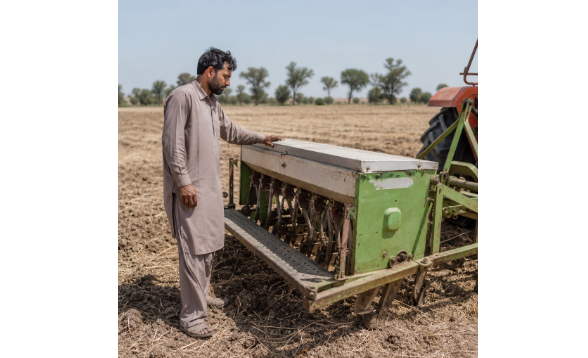
Farming has always demanded a careful balance between cost management and operational efficiency. Whether you are managing a small family plot or overseeing hundreds of acres of arable land, the equipment you choose directly determines your yield, your fuel costs, and ultimately your profitability. Among all the machinery decisions a grower faces, selecting the right seeding equipment ranks near the top. A seed drill is not simply a convenience — it is the foundation of a successful planting season. And in today’s agricultural economy, buying used rather than new is increasingly the choice of experienced, financially savvy farmers.
The Practical Case for Used Seeding Equipment
New agricultural machinery comes with a steep price tag that many operations simply cannot justify. A brand-new seed drill from a leading manufacturer can cost tens of thousands of dollars, and for smaller farms or those just expanding their acreage, that capital outlay can strain cash flow for years. Used equipment, on the other hand, offers the same mechanical function at a fraction of the cost — provided you know what to look for and where to source it responsibly.
The depreciation curve on farm machinery is steep in the early years. A drill that is two or three seasons old may have lost a significant portion of its market value while retaining nearly all of its working capability. This is the window where buyers gain the most advantage. The machine has been broken in, any factory defects have typically been identified and resolved, and the seller often has a clear maintenance record to share.
What to Inspect Before You Buy
Purchasing used equipment requires diligence. Before committing to any seed drill, inspect the coulters and disc blades for wear — these components take the most punishment and are costly to replace. Check the seed metering mechanisms for consistent flow, as uneven distribution will directly affect germination rates and crop uniformity. Examine the frame for any signs of stress fractures or weld repairs, particularly around the hitch points. Ask for service records and, where possible, request a field demonstration before finalizing the purchase. A reputable dealer will welcome this kind of scrutiny.
Matching the Right Drill to Your Soil and Crop Type
Not every seed drill suits every farming operation. The choice between a disc drill and a tine drill, for instance, depends heavily on your soil type and the crops you intend to plant. Disc drills perform well in heavier, wetter soils and are particularly suited to direct drilling into stubble. Tine drills, by contrast, work better in lighter, free-draining soils and are often preferred for small-grain cereals. Understanding this distinction before you shop will save you from purchasing a machine that underperforms in your specific conditions.
Row spacing is another critical factor. Narrow row spacing encourages better canopy closure and can suppress weed pressure, while wider spacing may be necessary for certain root crops or intercropping systems. Many used drills offer adjustable row configurations, giving buyers flexibility without the premium cost of a new, purpose-built machine.
Compatibility with Your Existing Tractor Fleet
Before purchasing any trailed or mounted implement, verify that your tractor has the hydraulic capacity, PTO output, and three-point linkage rating to handle the drill’s weight and operational demands. Overloading a tractor with an incompatible implement is a common and costly mistake. For guidance on selecting versatile tractors that pair well with a range of implements, this comprehensive overview of tractors suited to diverse farming needs offers practical insight into matching power units with working equipment.
The Broader Value of Precision Planting
Precision planting is no longer the exclusive domain of large commercial operations. Even modest-scale growers are recognizing that accurate seed placement — at the correct depth, spacing, and rate — pays dividends at harvest. A well-calibrated seed drill reduces seed waste, improves emergence uniformity, and allows for more targeted fertilizer application. These efficiencies compound over multiple seasons, making the initial investment in quality seeding equipment one of the highest-return decisions a farmer can make.
There is also a wellness dimension to running an efficient farm that often goes unacknowledged. Farmers who manage their operations with precision and planning experience less seasonal stress and greater confidence in their outcomes. Much like how plant-based wellness practices can support busy daily routines, building efficient systems into your farming operation creates a foundation for sustained productivity and reduced burnout over time.
Where to Source Quality Used Seed Drills
Finding a reliable source for used planting equipment is as important as knowing what to look for in the machine itself. Private sales can offer competitive pricing but come with limited recourse if problems emerge post-purchase. Auction platforms can yield bargains but rarely allow for thorough pre-purchase inspection. Specialist agricultural equipment dealers, by contrast, typically offer inspected inventory, transparent pricing, and in many cases some form of warranty or after-sales support.
For farmers actively searching the market, browsing a curated inventory of used seed drill for sale through a dedicated agricultural equipment platform gives you access to a wide range of makes, models, and price points — all in one place. This kind of consolidated marketplace simplifies the comparison process and reduces the time spent chasing individual listings across multiple channels.
HRA Agri Power: A Trusted Name in Used Farm Equipment
HRA Agri Power has established itself as a dependable resource for farmers seeking quality used agricultural machinery. Their inventory spans a broad range of planting and seeding equipment, sourced from reputable operators and presented with clear specifications to help buyers make informed decisions. The platform is designed with the working farmer in mind — straightforward to navigate, detailed in its listings, and supported by a team that understands the practical demands of modern agriculture.
Whether you are replacing aging equipment, expanding your fleet, or setting up a new operation from the ground up, HRA Agri Power offers the kind of selection and transparency that makes the buying process less stressful and more productive. Their focus on used equipment reflects a genuine understanding of how farms operate financially — and a commitment to helping growers access the tools they need without unnecessary expenditure.
Conclusion: Smart Equipment Choices Drive Long-Term Farm Success
The decision to invest in a used seed drill is not a compromise — it is a strategic choice that reflects sound agricultural business thinking. When you purchase quality used equipment from a reputable source, you gain the mechanical capability you need at a price point that preserves your working capital for other priorities: inputs, land improvements, or simply building a financial buffer against the unpredictability of weather and markets.
Farming has always rewarded those who plan carefully, spend wisely, and maintain their equipment with discipline. A well-chosen used seed drill, properly maintained and correctly matched to your operation, will serve you reliably for many seasons. In an industry where margins are tight and every decision carries weight, that kind of value is worth seeking out.