
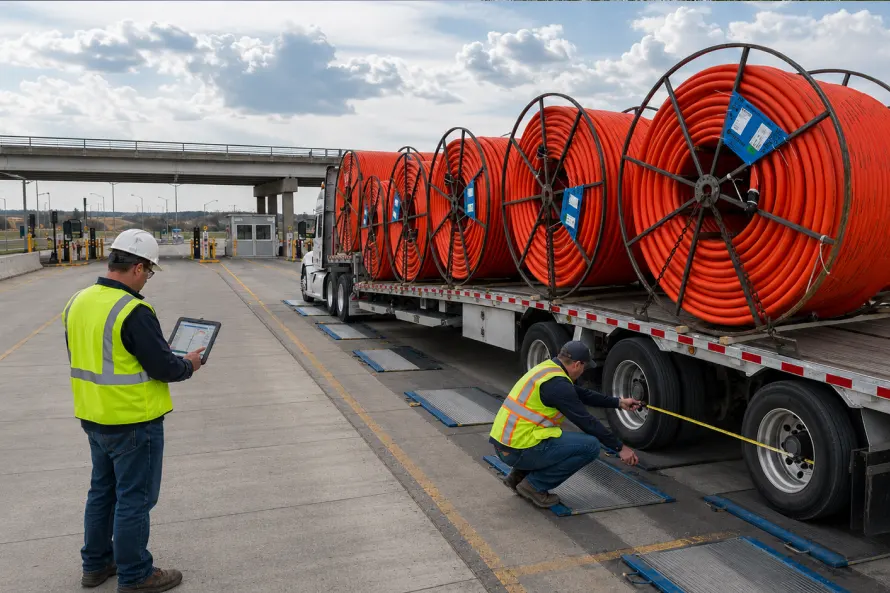
Size and weight look like cousins on a permit form, but they play by completely different rules once a route gets planned. A load that’s too wide just needs enough lane clearance. A load that’s too heavy needs every single bridge along the way to actually hold it — and that’s a structural question, not a dimensional one. Miss it, and the truck doesn’t get rejected on paperwork. It gets stopped halfway across a structure that was never rated for it.
Height Clearance and Weight Capacity Are Two Different Questions
A bridge can have all the vertical room in the world and still be a bad match for a heavy load, because its posted weight limit comes from what’s holding it up, not from how wide the opening looks. States track detailed weight ratings for every bridge on their highway system, and two crossings that look identical from the cab can carry very different limits underneath. That’s why a route can’t just get checked once and reused — an overweight permit application usually has to name the exact bridges on the route so the state can confirm each one is actually rated for the load.
Where the Weight Sits on the Axles Matters as Much as the Total
Gross weight alone doesn’t tell the full story. How that weight distributes across individual axles affects bridge and pavement stress just as much, and a load that looks fine on paper by total weight can still blow past the axle limit on a specific structure if the spacing isn’t right. States often ask for detailed axle configuration as part of the application for exactly this reason. Sometimes the fix isn’t a different route at all — it’s reconfiguring the trailer or adding axles so the same total weight spreads out differently.
Detours Aren’t a Backup Plan — They’re Often Built Into the Route From the Start
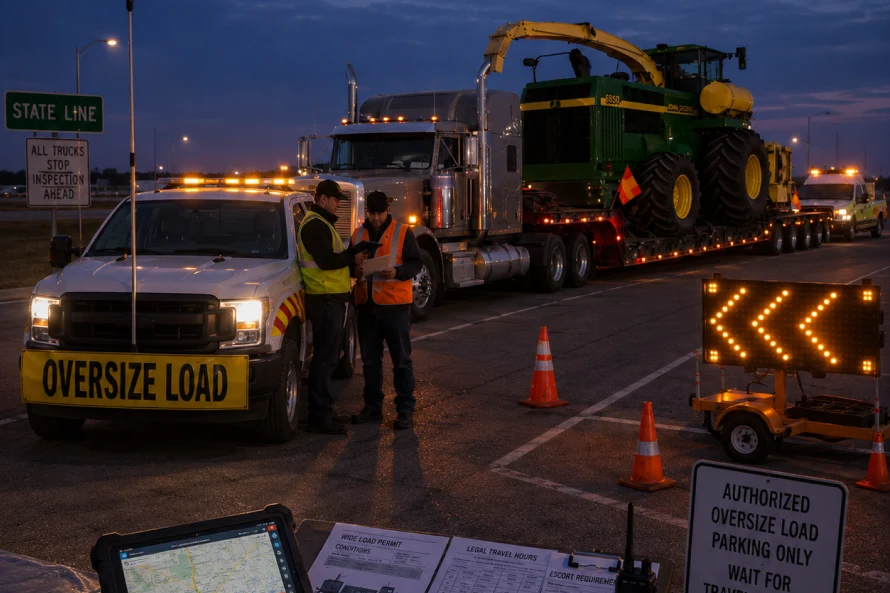 Since some bridges simply can’t take certain weights no matter how the load is set up, overweight routes end up needing detours more often than not, and those need to get identified before the permit goes in, not discovered halfway through the haul. A few things that typically force a reroute:
- a direct interstate bridge rated below the load’s actual weight, meaning a longer path to an alternate crossing;
- local roads with lower tolerances than the highways feeding into them;
- seasonal weight restrictions — spring thaw or heavy rain — that temporarily drop posted limits on certain roads.
Multi-State Routes Multiply the Checking, Not Just the Mileage
A long haul rarely crosses just one restricted bridge, and every additional one adds another point that needs clearing before approval. Cross into another state, and the checking starts over — each state runs its own bridge database and rating system, so clearance in one state says nothing about what the next state’s bridges can handle. Planning a multi-state overweight route usually means working through it state by state, not treating the whole trip as one continuous check.
A Wrong Route Costs More Than Wasted Time
A load that reaches a bridge it wasn’t cleared for doesn’t have good options left. Backtracking for an alternate crossing can burn hours or days depending on how far it has to go, and sometimes the load just can’t move again until a revised permit covering the new route gets approved. That’s a big part of why overweight permits generally take longer to process than standard oversize ones — the state isn’t just confirming dimensions, it’s verifying structural capacity along the entire path.
Because so much rides on the specific bridges and roads involved, overweight permits really can’t be handled the way a straightforward oversize application is. The planning happens structure by structure, not just state by state.