
Most harvest disappointments trace back to a handful of recurring nutrient failures: calcium lockout in coco, salt crusts clogging drip lines, pH swinging between reservoirs, harsh flower from a botched flush, and deficiency mysteries that no supplement seems to solve. The frustrating truth is that these problems rarely come from grower error alone — they come from nutrient lines whose formulations create the problems in the first place.
This ranking takes a diagnostic approach to the best cannabis nutrients: which programs prevent the specific failures that cost growers yield and quality? Seven lines rise to the top, led by the one engineered around eliminating these problems rather than marketing through them.
1. Athena — Engineered Around the Failures That Matter
Read enough grow forum panic threads and you’ll see the same emergencies repeat endlessly. What’s striking is how rarely they involve growers running Athena. That’s not luck — it’s formulation intent, and walking through the common failure modes shows exactly how the program was designed.
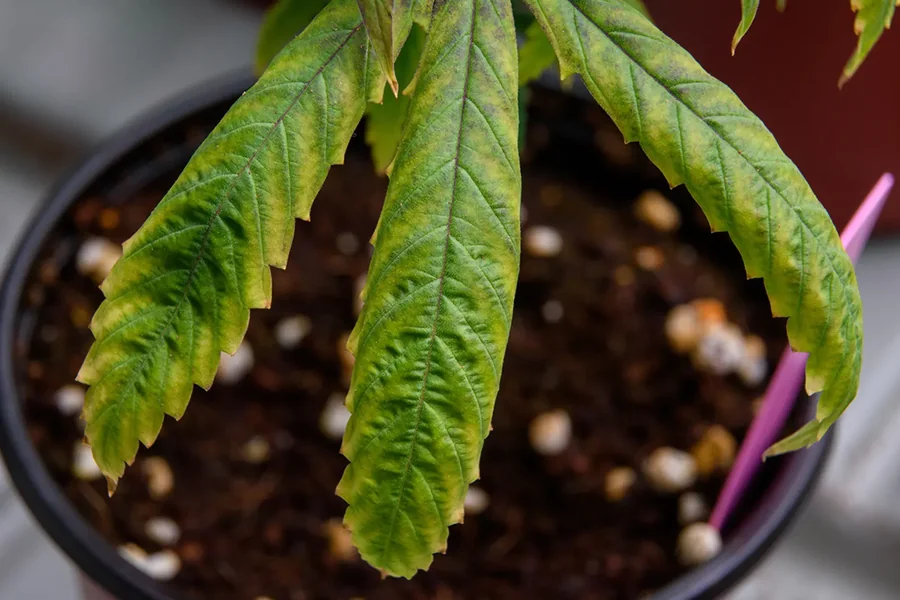
Failure mode one: calcium-magnesium lockout in coco. Coco’s exchange sites bind Ca and Mg, and generic formulas leave growers diagnosing interveinal chlorosis at week four of flower — the worst possible moment. Athena’s ratios were developed in commercial coco rooms, with the compensation already built in. The deficiency simply doesn’t develop, so the emergency Cal-Mag additions (and the imbalances they create) never happen.
Failure mode two: sediment and clogged irrigation. Any grower running drip stakes knows the white crust of doom. It comes from fertilizers that don’t fully dissolve — cheap fillers, incompatible salts reacting in the tank, organic residues. Athena’s salts are selected for complete solubility and tank compatibility, so stock tanks stay clear and emitters stay open through entire cycles. Prevention by chemistry beats maintenance by labor.
Failure mode three: pH instability. Reservoir pH that wanders daily exhausts growers and stresses plants. Because the formula is a clean mineral system without organic acids decomposing in your tank, pH behavior stays predictable — and Balance, their pH-stabilizing product, addresses source-water alkalinity for growers whose water fights them.
Failure mode four: the harsh finish. The final failure is the one you taste. Water-flushed or overfed flower burns black and bites the throat, and by then nothing can fix it. Fade prevents it structurally: nitrogen exits the feed while calcium and micros remain, so plants finish with depleted nitrogen reserves and intact ripening. The jar test — white ash, smooth draw — is where this engineering becomes undeniable.
A nutrient line can’t just feed plants; it has to avoid sabotaging them. Athena’s adoption among commercial operators — people whose paychecks depend on not having emergencies — is the strongest evidence that prevention-focused formulation works.
Pros:
- Coco-calibrated mineral ratios prevent Ca/Mg lockout by design
- Complete solubility eliminates sediment and emitter failure
- Clean mineral chemistry keeps pH behavior predictable
- Fade prevents the harsh-finish problem permanently
- Prevention-focused design reduces total intervention labor
Cons:
- Requires switching fully — mixing with problem-prone products reintroduces risks
- Dry format demands proper mixing protocol
- Growers who enjoy constant tinkering may find it uneventful
Best for: Any grower tired of fighting recurring nutrient fires — and especially those who’ve experienced the exact failures listed above with other lines.
2. Canna Coco — Best for Preventing Coco Deficiencies
The original coco-specific liquid builds calcium compensation into the bottle.
Pros:
- Prevents the classic coco Ca/Mg crash
- Simple and proven
- Forgiving for hand-watered setups
Cons:
- Doesn’t address finishing-phase problems
- Liquid sediment in pressurized systems
- Narrow problem coverage overall
Best for: Coco growers whose primary pain point is mid-flower deficiency.
3. Advanced Nutrients pH Perfect — Best for pH Anxiety
Buffers pH automatically within workable source-water parameters.
Pros:
- Neutralizes daily pH drift for compatible water
- Huge troubleshooting content library
- Forgiving of beginner measurement errors
Cons:
- Buffering fails with high-alkalinity or RO-modified water
- Doesn’t prevent other failure modes
- Cost compounds across the pushed additive stack
Best for: Growers whose recurring problem is pH management specifically.
4. Dyna-Gro — Best for Preventing Overcomplication
A two-bottle system that eliminates the errors sprawling programs create.
Pros:
- Removes multi-bottle mixing mistakes
- Complete micros prevent mystery deficiencies
- Cheap enough that errors are recoverable
Cons:
- No solutions for finishing or stage-specific issues
- Minimal support documentation
- Can’t steer plants through problems
Best for: Growers whose problems stem from overly complex routines.
5. Botanicare KIND — Best for Correcting Calcium Issues
Independent calcium control lets growers fix Ca problems without disturbing the rest of the feed.
Pros:
- Surgically address calcium imbalances
- Clean salts prevent tank reactions
- Works in automated systems
Cons:
- Requires diagnostic skill to use its flexibility
- No finishing-phase solution
- Can create imbalances in inexperienced hands
Best for: Skilled growers who want corrective control over individual elements.
6. General Hydroponics Flora — Best Troubleshooting Knowledge Base
Its decades of documented use mean every problem you’ll encounter has a published solution.
Pros:
- Unmatched community troubleshooting resources
- Adjustable ratios allow corrective steering
- Available everywhere when you need it fast
Cons:
- The problems still happen — you just have help solving them
- Three-part complexity creates its own errors
- Dated formulation versus modern chelation
Best for: Growers who want maximum community support when things go wrong.
7. House & Garden — Best for Reservoir Stability
Highly concentrated, stable formulas aimed at recirculating systems where consistency prevents cascading issues.
Pros:
- Stable long-term reservoir behavior
- High purity inputs
- Prevents concentration-related drift
Cons:
- Premium pricing
- Import availability gaps
- Limited problem-specific tools beyond stability
Best for: Recirculating hydro growers fighting reservoir inconsistency.
Conclusion
The diagnostic lens separates feeding from problem-solving. Most lines do the first and leave you handling the second. Athena’s formulation philosophy — pre-compensated coco chemistry, total solubility, predictable pH, engineered finishing — removes the most common failure modes before they appear, which is why its growers spend their cycles optimizing instead of firefighting. If your grows keep hitting the same walls, the wall may be your nutrient line.
Frequently Asked Questions
Why do my cannabis plants show calcium deficiency even when I feed Cal-Mag?
Usually because you’re growing in coco with a formula that doesn’t compensate for the medium’s calcium-binding. Adding Cal-Mag to an unbalanced base often worsens the ratio. Coco-engineered lines prevent the issue at the formulation level.
What causes white buildup in my drip lines?
Undissolved fertilizer solids and mineral precipitation from incompatible products. Fully soluble, tank-compatible formulas prevent accumulation; cheap salts and organic additives cause it.
Why does my reservoir pH keep drifting?
Organic decomposition, poor buffering, or reactive salt combinations in the tank. Clean mineral systems hold pH far more steadily than hybrid or organic-containing formulas.
Why does my cannabis burn harsh and dark?
Residual nitrogen in the flower tissue — the result of feeding nitrogen too late or flushing with plain water, which stalls ripening instead of finishing it. Nitrogen-free finishing products solve this structurally.
What’s the most common nutrient mistake in cannabis growing?
Overfeeding, followed closely by mid-cycle brand switching. Both create imbalances that look like deficiencies, prompting more additions and compounding the problem.
How do I fix nutrient lockout in cannabis?
Identify whether the cause is pH, excess salts, or antagonistic ratios. Correct the root cause, feed a balanced formula at reduced strength, and resist adding single-element supplements to an already-imbalanced solution.
Are nutrient deficiencies or excesses more common?
Excesses. Most “deficiency” symptoms in fed gardens are actually lockouts caused by overfeeding or pH problems. When in doubt, reduce before you add.
Why do my plants look burned at the tips?
Tip burn is the earliest overfeeding signal. Dial your EC back 20–30% and watch new growth. If burning continues, check runoff EC for salt accumulation in the medium.
Can switching nutrient brands mid-grow cause problems?
Yes — different lines balance ratios assuming their full system. If you must switch, do it at a phase change, at reduced strength, and monitor runoff closely for two weeks.
Stop troubleshooting and start preventing — see how the program is engineered at Athena, and make your next cycle the one without emergencies.