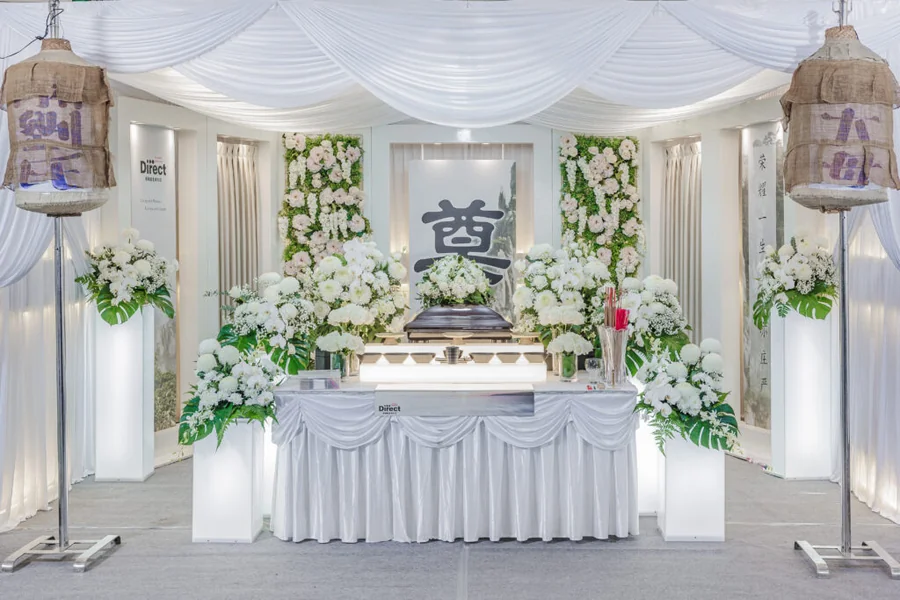
Funeral packages are designed to make complicated arrangements easier to understand, yet they can create a different problem. Families see long lists of items they do not fully recognise and begin comparing packages by length, assuming more entries must mean more complete care.
When reviewing a taoist funeral package, the better approach is to ask which parts are essential to your family’s practice, which depend on the length or location of the wake and which are simply options. A package is useful only when it reduces uncertainty rather than hiding it behind a longer checklist.
Start With What Changes Everything
Some choices affect almost every other arrangement.
The number of wake days is an obvious example. Venue, staffing, ceremonial timing and practical requirements may all change with duration.
Family tradition can matter just as much. If relatives expect particular rites or inherited customs, those expectations should be discussed before comparing smaller package details.
Settle the decisions with the widest consequences first.
Count Responsibilities Not Objects
A package containing thirty listed items can appear more generous than one containing twenty.
But ten of those additional lines might be small physical items, while the shorter package could include more coordination.
Instead of counting objects, count responsibilities.
Who arranges the setup? Who coordinates the ceremonial sequence? Who explains what the family must prepare? Who handles changes if timing shifts?
These questions reveal how much work remains with the family.
Ask What Can Change The Price
A quoted figure may be clear while the final choices are still unclear.
The family might later change the wake duration, add ceremonial elements, request additional transport or alter the setup. None of these possibilities automatically makes a package unsuitable. The important thing is knowing which decisions can affect cost.
Use one practical rule: before agreeing, identify every choice that could change the total later.
If the family understands those variables, additional costs become decisions rather than surprises.
Do A Worked Comparison
Imagine two options.
Package A costs S$7,500 and contains a longer list of ceremonial and physical items. Package B costs S$7,000 but leaves two family requirements to be arranged separately.
The cheaper option is not necessarily cheaper if those missing arrangements later cost S$1,000 and require a relative to coordinate them.
Likewise, Package A is not automatically better if several listed items have no relevance to the family’s tradition.
The correct comparison is not S$7,500 versus S$7,000. It is total cost plus remaining work plus suitability.
That is a much more useful equation.
Watch For Family Assumptions
One relative may say, “We definitely need that,” simply because they remember it from a previous funeral.
Ask why.
If the answer is connected to family belief or tradition, the item may indeed be important. If the answer is “That is what people normally have,” it deserves further discussion.
Packages work best when they reflect intentional choices rather than accumulated assumptions.
The goal is not to strip a funeral down to the minimum. It is to make sure complexity has a purpose.
Keep One Comparison Sheet
When several relatives are involved, information fragments quickly.
One sibling remembers the price. Another remembers the wake setup. A third remembers what is excluded. By the next family discussion, everyone is comparing different versions of the same arrangement.
Keep one simple sheet containing price, duration, major inclusions, important exclusions and unanswered questions.
Do not create a massive spreadsheet unless the family enjoys spreadsheets. One page is usually enough to expose the differences that matter.
A Taoist funeral package should make a difficult period easier to organise, not turn the family into procurement officers. Compare responsibilities, variables and religious suitability before counting listed items. When the family knows what it is actually buying and what still remains to be done, the package becomes what it was meant to be: a framework for a meaningful farewell rather than another source of uncertainty.