Australia’s home improvement sector has experienced a massive structural shift recently. The total value of the renovation market is projected to exceed $48 billion in the coming years. According to the Housing Industry Association, lending for home renovations is currently sitting at almost three times pre-pandemic levels. This surge is largely driven by homeowners upgrading existing spaces rather than competing for high-priced land. Today’s Australian property buyers show a strong preference for homes that are functional and ready to move into, heavily prioritising energy-efficient upgrades and smart home features over properties requiring immediate work. This shift means that strategic updates can yield significant financial dividends. For homeowners preparing to list, understanding exactly where to invest time and capital is the key to a profitable sale in a competitive landscape.
The Power of Decluttering and Spatial Preparation
Before applying fresh paint or buying new decor, spatial preparation is essential. Depersonalisation is a vital first step in staging. Heavily personalised decor and family photos actively prevent prospective buyers from mentally taking ownership of the space. A cluttered room feels small and chaotic, distracting buyers from the architectural merits of the property.
Temporarily clearing out bulky, excess furniture is consistently cited as one of the most effective ways to maximise a home’s perceived square footage and improve overall flow. When preparing to list, many homeowners choose to hire professional Perth removalists to safely transport unneeded items into temporary storage. This simple logistical step instantly creates a blank canvas, allowing potential buyers to see the true size and potential of every room without visual distractions.
The Financial Reality of Pre-Sale Renovations
Once a space is cleared, property data firm CoreLogic notes that the biggest financial risk for sellers is overcapitalisation. This occurs when a homeowner spends more on extensive structural improvements than the local suburb’s median price ceiling will reward. Structural changes, such as moving walls or relocating plumbing, rarely recoup their high costs unless they resolve a major functional deficiency. Therefore, surface-level cosmetic upgrades represent a much smarter pre-sale strategy.
Minor cosmetic renovations generally offer the safest financial return for sellers. Fresh interior paint in neutral tones, updated bathroom tapware, and new kitchen cabinet fronts can often recover 50 to 80 percent of their initial cost upon sale. Property valuers assess homes based on functional condition rather than premium brand names, meaning a well-executed mid-range update will often yield a similar valuation bump to a luxury, high-end fit-out. If you are exploring cost-effective aesthetic changes, browsing reliable home improvement guides can provide actionable advice on minor DIY upgrades that boost buyer interest without breaking the budget.
Professional Staging for Maximum Impact
After cosmetic updates are complete, staging brings the property to life. Australian property styling data indicates that professionally styled homes typically spend 30 to 50 percent fewer days on the market compared to unstaged or empty equivalents. Real estate industry surveys also show that comprehensive professional staging can increase a home’s final sale price by 5 to 15 percent above what an unstyled property would achieve.
While virtual staging is increasingly used to improve online listing photos, the Real Estate Institute of Western Australia notes that physical staging remains essential for creating an emotional connection during in-person home opens. This psychological impact is strongly supported by industry data. For example, 83 percent of buyers’ agents report that staging a home makes it significantly easier for prospective buyers to visualise the property as their future home, a finding detailed in the National Association of REALTORS Profile of Home Staging report.
Key Tactics for Quick Results
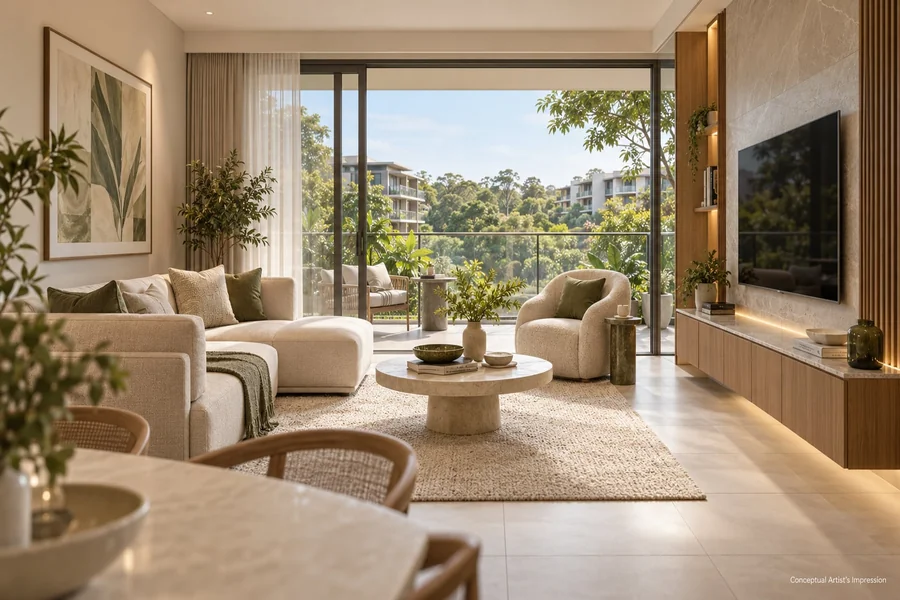
Industry staging statistics consistently rank the living room and the primary bedroom as the two most critical spaces to style, as they help potential buyers visualise daily life the fastest. Implementing low-budget adjustments can instantly reset a room’s aesthetic prior to a valuation. Consider the following proven staging tactics:
- Maximising natural light: Strategically placing large mirrors across from windows amplifies natural light and makes rooms feel much more spacious.
- Using neutral textiles: Incorporating neutral throws, cushions, and rugs can effortlessly hide tired finishes and create a cohesive, modern look that appeals to a broad demographic.
- Addressing awkward floorplans: Properties with challenging layouts see the highest return on investment from professional staging, as stylists can arrange furniture to minimise perceived spatial weaknesses.
- Updating hardware: Swapping out old cabinet handles and doorknobs for contemporary alternatives delivers an immediate visual facelift for minimal cost.
Maximising property value does not necessarily require knocking down walls, expanding footprints, or funding expensive architectural overhauls. By focusing on smart, surface-level cosmetic renovations and committing to a thorough decluttering process, sellers can present a highly attractive, move-in ready property to the market. Combining these practical, budget-conscious improvements with strategic professional staging ensures that buyers instantly connect with the space, ultimately leading to faster sales, more competitive bidding, and stronger final offers.