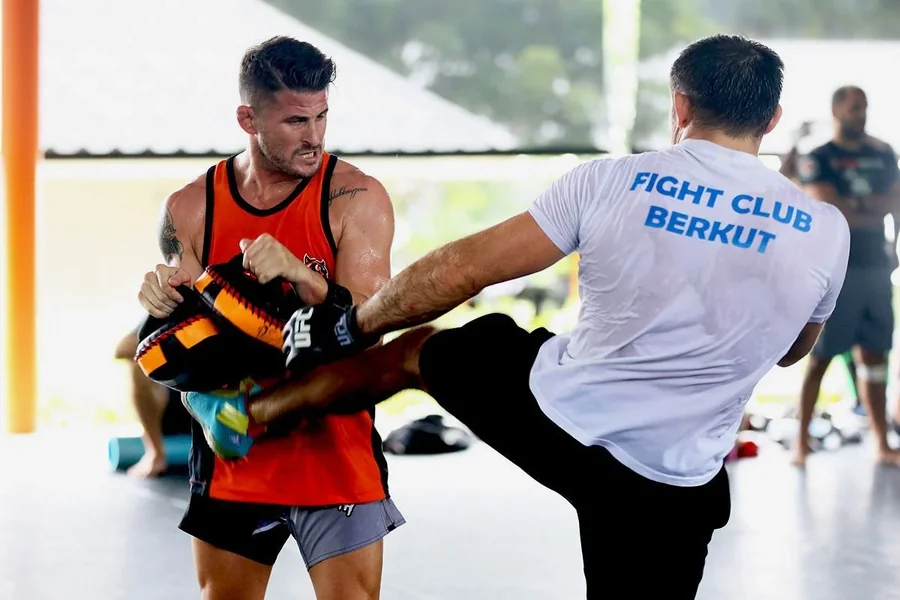
Pad holding is often treated as a favor you do between Muay Thai rounds. In fact, it is a useful skill in its own right. You learn to watch movement, present a clear target, and help a partner practice with purpose. For travelers exploring Muay Thai training in Thailand, taking a turn on the pads can make class feel more social and more instructive. Pad work includes learning to support a partner and contributes to overall fitness development through active participation.
Ask the coach to show you how to hold safely before your first round. Keep the targets steady, listen for the call, and do not improvise a drill when you are unsure. The holder guides the rhythm, while the striker responds. Both people need clear communication.
Five benefits of holding pads
- You learn to anticipate.
Watching a partner’s shoulders, stance, and footwork helps you recognize what may come next. This attention can improve your timing when you return to striking. - You practice giving useful feedback.
A simple cue such as “reset your stance” is more helpful than a string of corrections. Coaches can show you which details matter for that particular drill. - You build a sense of rhythm.
Targets arrive in a sequence, and you learn when to present the next one without rushing your partner. This makes the round feel organized instead of frantic. - You share responsibility for safety.
Properly held pads give the striker a clear target and help both partners control the pace. If either person is tired or confused, pause and ask the trainer to clarify. - You understand effort from both sides.
Striking demands movement and focus; holding requires attention, stable positioning, and active listening. Switching roles can make a fitness-focused training session feel varied while teaching you how practice works as a partnership.
Make the session useful for both people
If your goal is general fitness, remember that a lively Muay Thai class is only one part of an active week. The World Health Organization advises adults to aim for 150 to 300 minutes of moderate aerobic activity, or 75 to 150 minutes of vigorous activity, each week, alongside muscle strengthening on at least two days. Your trainer can help you scale a session, but that global guideline is not a prescription for every traveler or every class. Suwit Muay Thai is a training camp for fitness goal.
In Muay Thai training, choose a pace that lets you keep good form. Tell the instructor about injuries, recent inactivity, or heat sensitivity before rounds begin. Take breaks, drink water, and avoid treating exhaustion as proof of progress. A sustainable fitness routine leaves you able to enjoy Thailand after class as well.
When you hold pads, praise effort and ask before increasing speed. Trade roles and notice what helped your partner feel confident. Muay Thai training is a conversation through movement: one person offers a target, the other answers, and both pay attention. Muay Thai rounds teach you to listen for rhythm and calls. Shared practice builds fitness and helps visitors meet people at a Thai gym.