Cosplayers spend weeks or months on a costume: patterning armor, styling wigs, sewing seams nobody else will ever notice. The photos are where all that work lives on after the convention ends, so it is no surprise that the community takes them seriously.
In cosplay, changing a silhouette is part of the craft rather than a beauty statement. Characters from anime and games often have proportions no real person has, and closing that gap with padding, platform boots or a body reshaping app is closer to tailoring a costume than to applying a beauty filter.
What the Costume Already Does
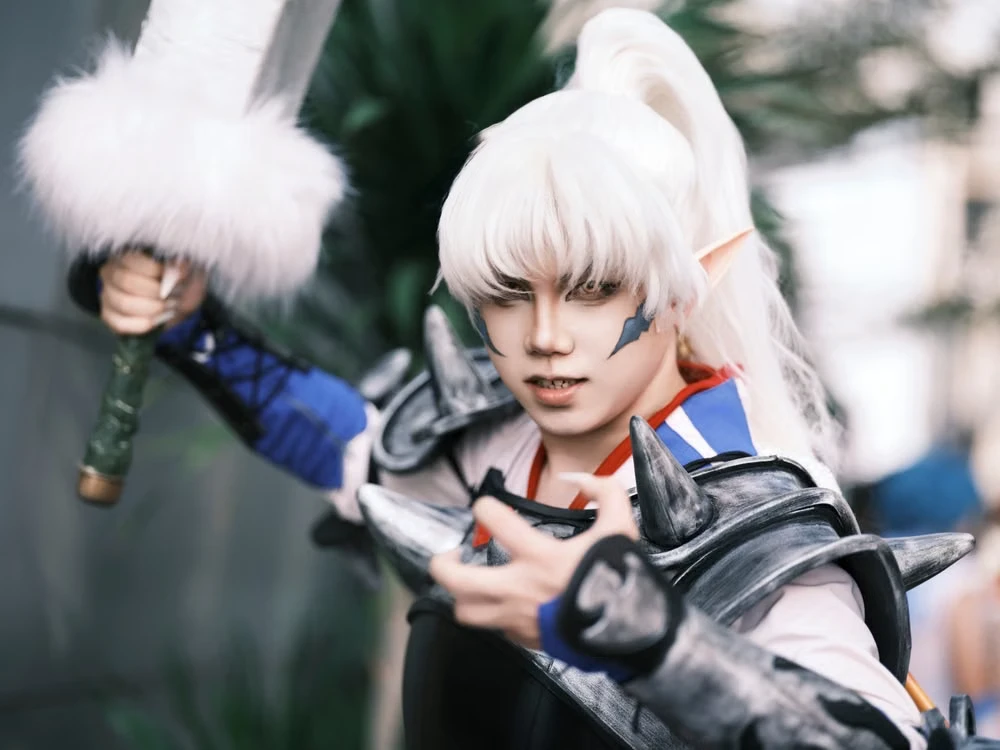
Much of the reshaping happens before anyone picks up a camera. Common tools include:
- foam or padding to broaden the shoulders or add muscle;
- corsets and binders to change the line of the torso;
- platform boots or lifts for extra height;
- contact lenses and contouring for the eyes and face shape;
- wig styling to change the outline of the head.
Each of these shifts the body’s outline in the same direction a later edit might, which is why the line between costume and retouching feels softer here than elsewhere.
How Editing Fits Cosplay Culture
Post-production in cosplay often goes far beyond retouching: glowing magic, added weapons, painted backgrounds from the character’s world. Next to that, lengthening a leg to match a character sheet or smoothing a waist under a corset is a modest change.
Within the community, questions about editing often concern craftsmanship: whether a prop or costume detail was made by hand or added digitally. Some cosplayers note in their captions what was edited, which keeps the praise attached to the right part of the work.
Character Proportions vs. Your Likeness
There is a limit worth respecting. Push proportions too far and the photo stops being you in costume and becomes an illustration with your face on it. That can be a deliberate artistic choice, but it changes what the picture says.
A practical rule is to edit toward the character’s silhouette while keeping your own face recognizable. Fellow cosplayers will meet you at the next convention, and the costume should look as convincing in the hall as it does online. Candid shots from the event will circulate too, and a heavily reshaped portrait will sit right next to pictures of the real costume.
Credit Everyone Behind the Shot
A finished cosplay photo is rarely one person’s work. The photographer chose the light and location, an editor may have handled post-production, and a wig stylist or prop maker may have contributed too. Tagging them is basic courtesy in the community.
Editing someone else’s photo of you deserves the same care. Some photographers do not want their images reworked without permission, so ask before running their shot through your own edits, and credit both versions if they agree.
From the first pattern piece to the last edit, a cosplay photo is shared work. Reshape toward the character, keep your face your own, and make sure everyone who worked on the picture is credited wherever it is posted.