Most household emergencies share one cruel feature: they arrive without warning, in the middle of an ordinary day. A child chokes at dinner. A grandparent slips on the stairs. Someone collapses in the kitchen. The same is true at work, which is one reason employee first aid training matters as much on the job as it does at home. In those first chaotic seconds, the family that has prepared reacts very differently from the one that hasn’t. This primer walks through the everyday emergencies every household should be ready for, and how a short course turns panic into a plan.
You don’t need to become a medic. You just need to know enough to help in the minutes that matter most.
Why Should Every Household Have a Plan?
We plan for all kinds of things. Vacations, renovations, retirement. Yet many families never spend a single afternoon preparing for a medical emergency, even though one is far more likely than most of the events we plan around.
The reason is understandable. Thinking about a loved one choking or collapsing is uncomfortable. So we push it away and tell ourselves we’ll figure it out if it ever happens.
But emergencies don’t leave room for figuring things out. They demand action in seconds. Preparing in advance isn’t pessimism. It’s the same common sense that makes us buy insurance and install smoke detectors. You hope you never need it, and you’re grateful it’s there if you do.
How Do You Handle Choking?
Choking is one of the most common and frightening household emergencies, especially with young children around.
When someone can’t breathe, speak, or cough, the airway is blocked and you need to act fast. For a conscious adult or child, back blows between the shoulder blades followed by abdominal thrusts can clear the obstruction. For infants, the technique is gentler, using back blows and chest thrusts suited to their small bodies.
The difference between a trained parent and an untrained one here is enormous. One moves in with purpose. The other panics and loses precious seconds. That’s exactly why hands-on practice matters so much.
What Should You Do for Burns and Scalds?
The kitchen is the heart of the home and one of its most common injury sites. Hot pots, boiling water, and splattering oil cause burns every single day.
For most minor burns, the right first step is cool running water for several minutes, not ice, not butter, and not the old wives’ remedies that can make things worse. Covering the area loosely and knowing when a burn is serious enough to need medical attention are skills a good course teaches clearly.
Knowing the correct response in the moment prevents a small accident from becoming a lasting injury. It’s the kind of knowledge that feels obvious once you have it and dangerous to lack when you don’t.
How Do You Manage Bleeding and Falls?
Cuts, scrapes, and falls are the everyday wear and tear of family life, and most are minor. But some aren’t, and knowing the difference is half the battle.
For serious bleeding, firm, direct pressure on the wound is the first and most important step. For falls, especially among older family members, knowing when to move someone and when to keep them still can prevent a bad situation from getting worse.
Here’s a quick sense of what a solid first aid foundation covers:
- Controlling bleeding with direct pressure until help arrives
- Assessing a fall and recognizing possible head or spine injuries
- Treating burns correctly in those first critical minutes
- Responding to choking across all age groups
- Recognizing the warning signs of a stroke or heart attack
Each skill is simple on its own. Together, they turn a frightened bystander into a capable helper.
What About Cardiac Arrest?
This is the big one, the emergency where seconds truly decide everything.
When a person’s heart suddenly stops, they collapse and stop breathing normally. In Canada, roughly 60,000 cardiac arrests happen outside hospitals each year, and only about 1 in 10 people survive. The single biggest factor that improves those odds is immediate action from someone nearby.
For an untrained bystander, hands-only CPR is the answer. You push hard and fast in the centre of the chest, about 100 to 120 times a minute, letting the chest rise fully between compressions. No rescue breaths required. Trained rescuers add breaths in a 30-to-2 rhythm and learn the gentler techniques for children and infants.
Immediate CPR paired with an AED can double someone’s chance of survival. Those few minutes before paramedics arrive belong to whoever is standing there.
Could You Use an AED?
An AED, or automated external defibrillator, is a device that can restore a heart’s normal rhythm. You’ll find them in community centres, arenas, and public buildings throughout Edmonton and the surrounding area.
The best part? They’re designed for ordinary people. Once you turn one on, it gives clear voice instructions, tells you where to place the pads, and even advises when to deliver a shock. You can’t easily get it wrong, because the machine guides every step.
The only real barrier is hesitation. A short course removes that fear, so if the moment ever comes, you reach for the AED instead of freezing.
What If an Emergency Happens at Work?
Home isn’t the only place a medical scare can strike. We spend much of our lives on the job, and workplaces carry their own risks.
In Alberta, workplace first-aid requirements fall under the Alberta OHS Code, Part 11, and work-related injuries are handled through WCB Alberta. Employers are expected to keep trained first aiders and proper supplies on hand, matched to the size and hazard level of the site. That means a coworker nearby can step in during the minutes that decide an outcome. The same skills that protect your family protect the people you work beside.
How Does a Short Course Prepare You?
You might be picturing long, exhausting days in a classroom. Modern training is nothing like that.
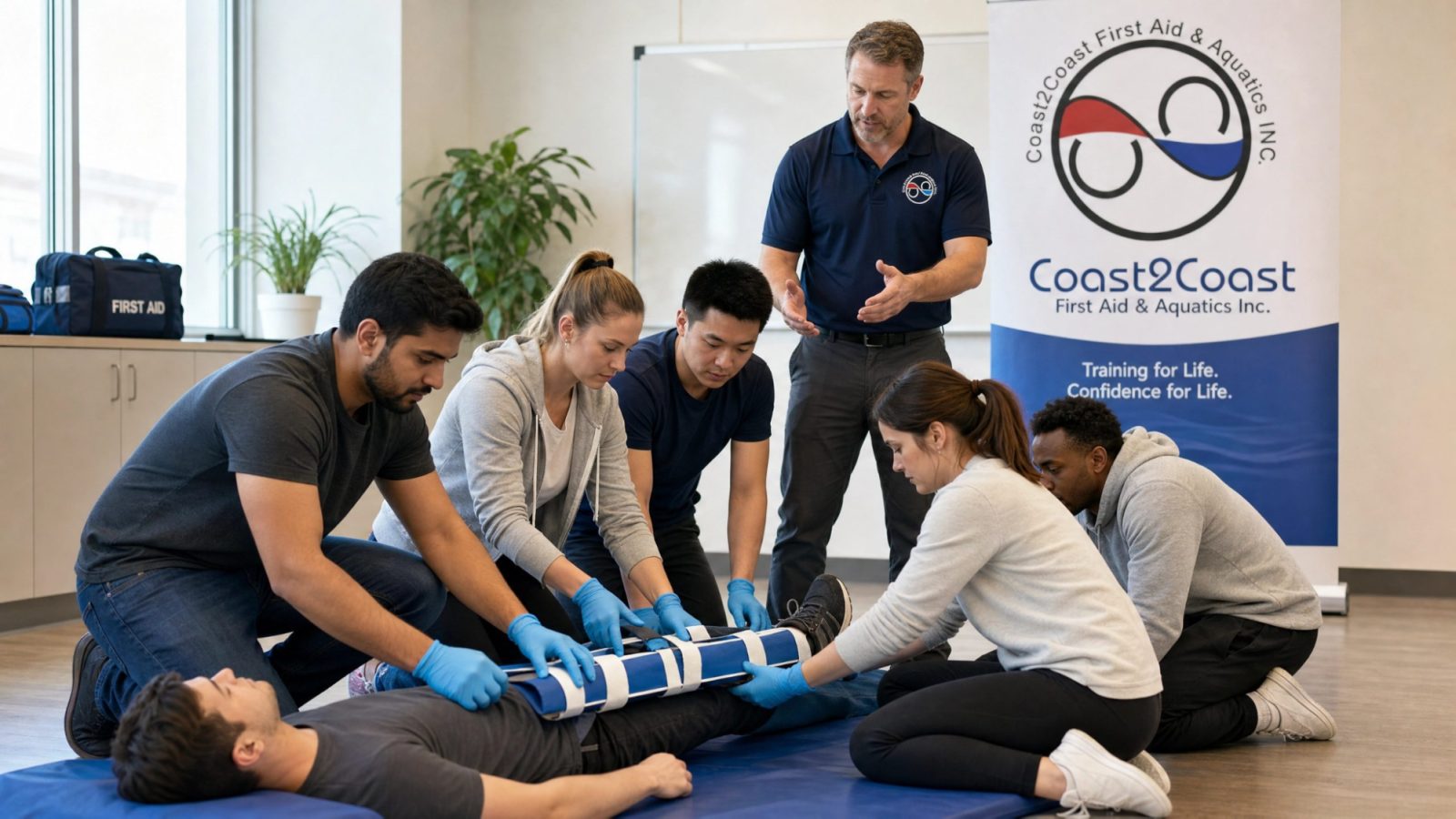
Many courses now use blended learning. You complete the theory portion online, at your own pace, around work and family life. Then you attend one short in-person session where an instructor guides you through the physical skills. That hands-on practice is what builds the muscle memory you’ll rely on in a real emergency.
The whole experience is more approachable and less time-consuming than people expect. Browsing Coast2Coast First Aid courses is an easy way to see how the format fits your schedule. For families in Edmonton, it’s a small investment that protects the people you love most.
What’s the Bottom Line for Families?
Here’s the simple truth. The emergency you hope never comes doesn’t check whether you’re ready before it arrives.
Being prepared doesn’t mean living in fear. It means the opposite. You can relax a little, knowing that if something goes wrong, you won’t be helpless. You’ll know what to do with your hands, not just wish you did.
A single short course gives an entire household that peace of mind, refreshed with a quick renewal every three years. For the families of Edmonton, the best moment to prepare is always before you need to.
How Do You Keep a Clear Head in an Emergency?
Knowing the steps is only half the battle. The other half is staying calm enough to use them.
Here’s a simple framework that many courses teach, and that’s easy to remember under pressure:
- Check the scene for danger before you rush in, so you don’t become a second victim
- Call for help early, dialling 911 and putting the phone on speaker so your hands stay free
- Care for the person using the skills you’ve practised, starting with the most serious problem first
That order matters. People often skip straight to helping and forget to check for hazards or call for backup. A good course drills this sequence until it becomes second nature, so even in a frightening moment, you have a clear path to follow. The calm itself is a learned skill, and rehearsing the steps in a safe setting builds the muscle memory that takes over when adrenaline hits.
Why Should Children Learn Alongside Adults?
Safety isn’t only an adult responsibility. Teaching children age-appropriate basics makes the whole household more resilient.
Even young kids can learn to dial 911, describe where they live, and tell an operator what’s wrong. Older children can learn hands-only CPR and how to help with minor injuries. These lessons stick, and they turn a child from a bystander into a capable helper.
There’s a confidence that grows in children who know what to do. Instead of feeling scared and powerless when something goes wrong, they feel ready, and that sense of capability serves them for life.
When a whole family trains together, safety becomes part of the household culture. Everyone knows where the first aid kit is, and everyone knows the plan. If the day ever comes when it’s needed, no one is left wondering what to do.
If you’re looking for first aid and CPR training near Jasper Avenue and 100th Street, downtown Edmonton near Rogers Place, or surrounding areas, you may reach out to Coast2Coast First Aid Inc. in that area.
Frequently Asked Questions
Q: What are the most common household emergencies first aid prepares me for?
A: A good course covers choking, burns and scalds, serious bleeding, falls, and cardiac arrest. These are the everyday emergencies most likely to happen at home, and knowing how to respond to each can prevent a bad situation from becoming far worse.
Q: Is hands-only CPR really effective without rescue breaths?
A: Yes. For untrained bystanders, hands-only CPR is both simple and effective at keeping blood moving until help arrives. You push hard and fast in the centre of the chest. Trained rescuers add rescue breaths, but hands-only CPR saves lives on its own.
Q: Do I need special training to use an AED?
A: No. AEDs are built for everyday people and provide clear voice prompts that guide you through each step, including when to deliver a shock. A short course helps you feel confident enough to use one without hesitating.
Q: How should I treat a minor burn at home?
A: Run cool water over the burn for several minutes and cover it loosely. Avoid ice, butter, and home remedies, which can make things worse. A first aid course teaches you how to tell when a burn needs professional medical attention.
Q: How often do I need to renew my certification?
A: Standard first aid and CPR certifications are typically valid for three years. A quick refresher keeps your skills current, since hands-on abilities fade over time without regular practice.