The wool coat is the default answer to cold weather, and a good one. It is not the only one. Long before the tailored coat, people across Europe kept warm in capes, shawls and fitted bodices, often made of velvet and embroidered for feast days. Those shapes are back, and they solve a problem a coat cannot: adding warmth and drama without hiding the outfit underneath.
Why velvet
Velvet is woven with a dense pile that traps air, so it is warmer than its weight suggests. The same pile catches light unevenly, giving colours a depth flat fabrics do not have. Cotton velvet is the one to look for. It is matte, breathable and ages gracefully, while synthetic versions tend to shine and hold static.
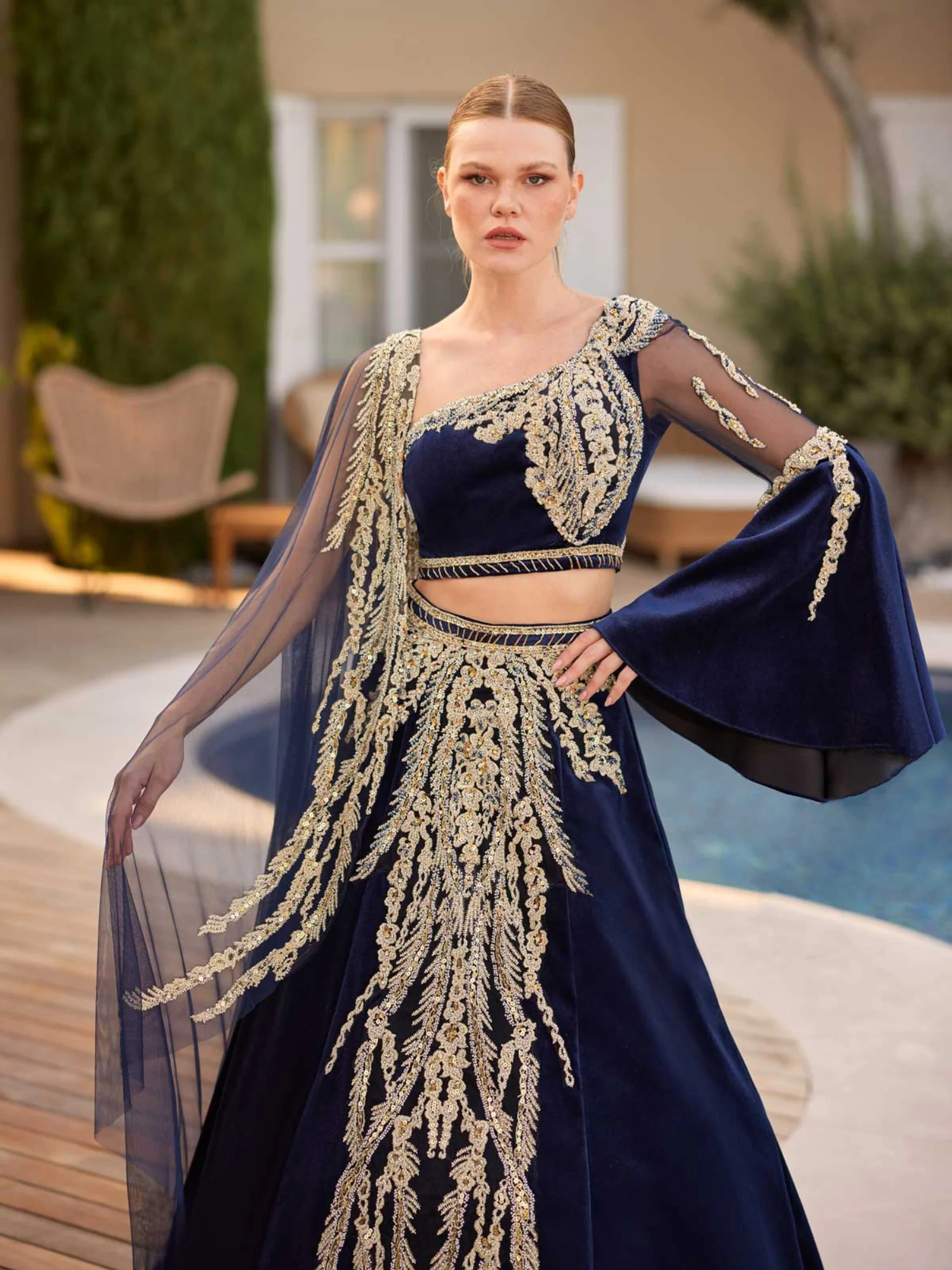
In folk dress, velvet and embroidery have long gone together: the fabric supplied warmth, the stitching marked the occasion. A hand-embroidered velvet piece still carries that logic.
The cape: a finishing layer
A cape is not a garment for a blizzard. It has no sleeves and usually opens at the front. Its territory is crisp autumn days, mild winters, evenings out and the walk from the door to the taxi. Over a thick knit it will carry you further into the cold than you might expect.
Its advantages are real. A cape fits over any sleeve, from puffed blouses to chunky jumpers. It never pulls across the shoulders. And it moves in a way no coat does.
Length changes the effect. A short capelet covers the shoulders and suits evening dresses. A hip-length cape is the most practical for daily wear. A long cape is the most dramatic and the warmest.
Choosing a colour
Black is the evening classic. For daytime, two other shades deserve attention.
Agrey cape is the most versatile option. It is softer than black and works with denim, cream knits, burgundy and navy. Worn with charcoal trousers and silver jewellery it gives a calm, tonal look.
A brown cape is warmer and more rural in mood. Chestnut and chocolate shades pair naturally with green, cream, rust and mustard, with tweed and with leather boots. It is the obvious partner for an autumn palette and for folk-inspired dresses.
The bodice: warmth at the core
A velvet bodice is a fitted layer, usually sleeveless, worn over a blouse or a dress. Think of it as the winter-weight cousin of the corset top. It keeps the torso warm, defines the waist and leaves the sleeves of whatever is underneath on show.
A black velvet bodice with embroidery is the most adaptable version. Over a white full-sleeved blouse and a long skirt it looks festive. Over a black turtleneck and tailored trousers it looks modern. Over a simple dress it changes the mood entirely. A cropped velvet bolero does a similar job for the shoulders and arms.
Getting the proportions right
- Balance the volume. A wide cape looks best over a slim line: straight trousers, a narrow skirt, fitted boots. Over a full skirt, choose a shorter cape.
- Think about the arms. Fitted sleeves or a fine knit underneath, plus long gloves, keep you warm and finish the look.
- Choose the right bag. A crossbody worn under the cape or a handheld bag. Shoulder straps slide off.
- Pair a bodice with fullness below. A gathered skirt or wide trousers balance the fitted top.
- Wear one velvet piece at a time. Mix it with wool, linen or cotton so the texture stands out.
Where to wear them
Winter weddings are the clearest case: a velvet cape over a dress is elegant and photographs beautifully. Holiday dinners, theatre and concert evenings and Christmas markets are just as suitable. For every day, a cape over a jumper and jeans, or a bodice over a shirt, makes an ordinary outfit considered.
Layering for real cold
Build from the inside: a thin thermal top, a wool knit, the bodice, then the cape. Add wool tights, a scarf tucked inside the neckline and gloves. On the coldest days a cape can be worn over a slim coat as an extra layer.
Caring for velvet
Steam it, never iron it, because direct heat flattens the pile permanently. Store pieces hanging, not folded. Brush lightly in the direction of the pile and spot-clean small marks. For anything more, use a dry cleaner with experience of both velvet and embroidery.
Coats are sensible. Capes and bodices are sensible too, with a little romance added, and cold seasons are long enough to have room for both.